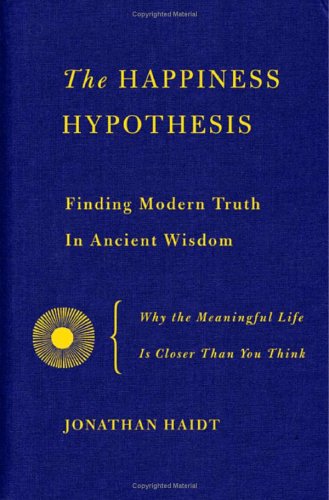
Price: (as of 2014-01-27 - Details)

Starred Review. The spirit is willing but the flesh is weak, lamented St. Paul, and this engrossing scientific interpretation of traditional lore backs him up with hard data. Citing Plato, Buddha and modern brain science, psychologist Haidt notes the mind is like an "elephant" of automatic desires and impulses atop which conscious intention is an ineffectual "rider." Haidt sifts Eastern and Western religious and philosophical traditions for other nuggets of wisdom to substantiate—and sometimes critique—with the findings of neurology and cognitive psychology. The Buddhist-Stoic injunction to cast off worldly attachments in pursuit of happiness, for example, is backed up by Mihaly Csikszentmihalyi's studies into pleasure. And Nietzsche's contention that what doesn't kill us makes us stronger is considered against research into post-traumatic growth.
The Happiness Hypothesis: Finding Modern Truth in Ancient Wisdom Feature


No comments:
Post a Comment