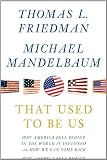
That Used To Be Us: How America Fell Behind in the World We Invented-- and How We Can Come Back (Thorndike Press Large Print by Thorndike Press
List Price : $34.99
Price Save : $34.99
SalesRank :2144568
Warranty:
LowestNewPrice: $30.99
LowestUsedPrice: $24.00


“[In That Used to Be Us there] are big truths, and the authors see them clearly and whole. As is usual in Mr. Friedman’s work the power of the core argument is buttressed by detailed reportage and blizzards of specific fact and detail, but the accumulation of anecdote and evidence never detracts from the book’s central thrust. That Used to Be Us is an important contribution to an intensifying debate, and it deserves the widest possible attention.” —Walter Russell Mead, The New York Times
“Friedman and Mandelbaum are men of the American elite, and they write to salute those members of the American elite who behave public-spiritedly and to scourge those who do not. Read more That Used To Be Us: How America Fell Behind in the World We Invented-- and How We Can Come Back (Thorndike Press Large Print
That Used To Be Us: How America Fell Behind in the World We Invented-- and How We Can Come Back (Thorndike Press Large Print Feature
Available from 1 Store :
| Store | Rating | Prices |
 |  | $34.99 |
| See more Price + Shipping Available on 1 store | ||

No comments:
Post a Comment